
In an AI Search World, Trust Wins
Jul 06, 2026Hello my friends, and welcome to Educated Marketing Decisions, where I share practical marketing insights for the aviation industry.
For years, aviation companies have focused heavily on search engine optimization, commonly known as SEO. The goal was simple: rank higher on Google, appear in search results, and drive traffic to the website. That still matters.
However, search behavior is changing. Buyers are no longer only typing keywords into Google and scrolling through blue links. Increasingly, they are asking direct questions through AI powered tools such as ChatGPT, Gemini, Perplexity, and AI-enhanced search engines.
This shift means aviation companies need to think beyond traditional rankings. The new objective is not only to appear in search results. The new objective is to become the trusted answer.
Traditional SEO focuses on helping websites rank for keywords. In the aviation industry, this may include search terms such as “private jet broker Miami,” “aircraft accessory repair,” “FBO South Florida,” or “aviation marketing agency.” However, AI driven discovery works differently.
Instead of searching short keywords, users are asking more specific questions, such as: What is the best private jet broker for a quick trip from Miami to New York?, how do I choose the right MRO provider?, what should I know before booking a private flight?, which aviation marketing agency helps executives build visibility on LinkedIn? These are not just search queries. They are decision making questions. That is why modern marketing must include AEO, AI SEO, and GEO.
AEO stands for Answer Engine Optimization. It refers to structuring content so answer engines can identify and pull clear, direct, and useful responses.
AI SEO focuses on helping AI-powered systems understand, trust, and reuse your content.
GEO stands for Generative Engine Optimization. It focuses on increasing the likelihood that your brand, company, or leadership is cited or recommended inside AI-generated answers.
Although these terms are often discussed separately, they work together. Their shared goal is simple: make your company clear, credible, and easy to understand for both humans and AI systems.
Consider a local private jet broker. In the traditional SEO model, the broker may want to rank for terms such as: private jet broker Miami, charter a private jet, luxury private aviation or private jet booking.
However, in an AI driven search environment, potential clients may ask more detailed questions: who is the best private jet broker for first-time private flyers?, what is the easiest way to book a private jet for a weekend trip?, what is the difference between booking with a broker and booking directly with an operator?, or how much does it cost to fly private from Miami to Colorado?
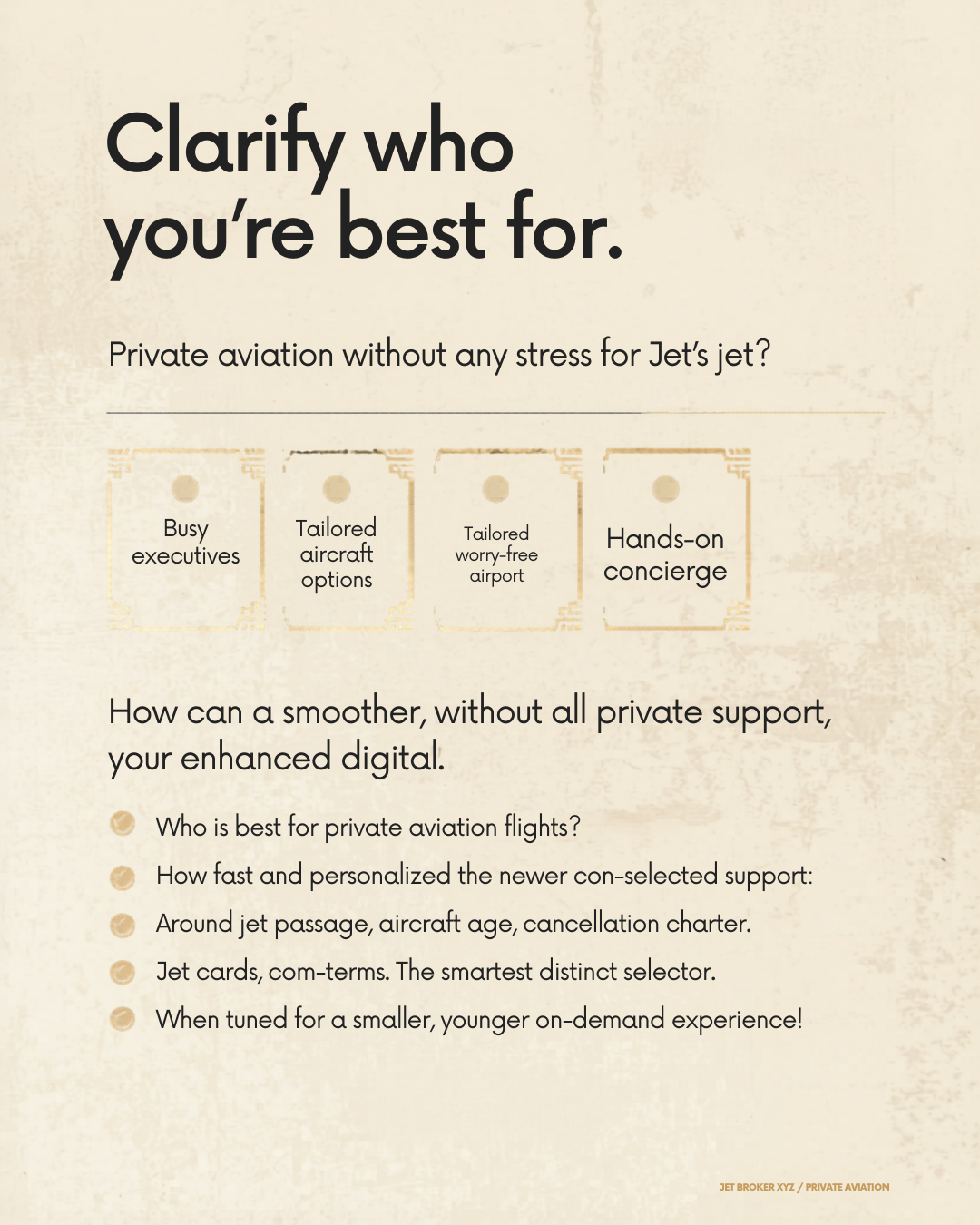
This means a company’s content must do more than sound polished. It must clearly explain who the company serves, what problem it solves, why it is different, and when it is the right choice. A generic statement such as "we provide premium private aviation solutions” is not enough. A stronger statement would be: "Our brokerage is best for business travelers, families, and high-net-worth clients who want fast, low friction private jet booking for domestic trips across the United States, with personalized service, access to newer aircraft options, and support throughout the booking process." This type of content gives users and AI tools useful context. It explains who the company is for, what it offers, and why it may be relevant.

Comparison content is especially valuable because users often ask AI tools to compare options. For example, a potential buyer may search for private jet broker versus direct operator, jet card versus on demand charter, best private jet option for short business trips or private jet broker versus fractional ownership.
A private jet broker should create content that clearly explains where the brokerage fits in the market. For example, “our brokerage may be a good fit for travelers who want personalized guidance, aircraft flexibility, and fast booking support without committing to a jet card or fractional ownership program.” The content should also acknowledge alternatives. A jet card may be better for someone who flies very frequently. Fractional ownership may work for someone with consistent long term usage. Direct operator booking may work for someone who already has a trusted operator. This kind of honest positioning builds trust. It also helps AI tools understand when and why to recommend the company.
Traditional blog posts are still useful, but AI tools often pull from clear, organized sections. Instead of publishing long, unstructured articles, aviation companies should organize content into sections such as what we offer, who we are best for, who we may not be best for, top services, common use cases, frequently asked questions, pricing factors, pros and cons. This structure helps readers scan the information quickly. It also helps AI tools identify useful answers within the content.
Question and answer pages are highly valuable for AI discovery because people naturally ask AI tools questions. For a private jet broker, relevant questions may include how much does it cost to fly private from Miami to Colorado?, how fast can I book a private jet?, what is the difference between a private jet broker and an operator?, can I book a one-way private flight?, do private jets have Wi-Fi?, what information do I need before requesting a quote?
For an MRO company, questions may include how do I choose the right repair station?, what certifications should an MRO have?, what causes long turnaround times in aviation maintenance?, what should operators look for in an accessory repair provider?,
For an FBO, questions may include what makes an FBO good for business aviation?, what should pilots and passengers expect from a premium FBO?, what amenities matter most for private aviation travelers? If an ideal customer is asking the question, the brand should be answering it.
Aviation companies should continue tracking traditional SEO metrics, but they should also begin tracking what can be called share of model. Share of model refers to how often a company appears, is mentioned, or is recommended inside AI generated answers. A simple way to measure this is to ask AI tools the same buyer focused questions once a week. For example who are the best private jet brokers in Miami?, what aviation marketing agencies specialize in LinkedIn visibility?, who are trusted MRO providers for aircraft accessories?, what should I know before choosing an FBO in South Florida? AI answers can change depending on the platform, wording, location, and available data. However, it can provide a useful directional signal. If a company is never mentioned, that may indicate that its digital presence is not clear, strong, or trusted enough.
The biggest mistake aviation companies can make is assuming that polished language is the same as clear positioning. Many aviation companies use phrases such as “premium service,” “trusted partner,” “high quality solutions,” and “customer focused experience.” Those phrases sound nice, but they often fail to explain what the company actually does, who it serves, and why a buyer should choose it.
In an AI driven search environment, vague language creates a disadvantage. The companies that win will be the ones that clearly answer who do we help?, what problem do we solve?, why are we credible?, when are we the right choice? and how are we different from other options? Clarity is no longer basic. Clarity is a competitive advantage.
AEO, AI SEO, and GEO are not future concepts. They are becoming essential parts of modern aviation marketing. As search continues to change, aviation companies must optimize for more than rankings. They must optimize for answers, trust, and discoverability. The goal is not just to appear online. The goal is to become the answer buyers trust before the first meeting.
If you want us to handle your visibility and help your aviation brand become easier to find, trust, and remember, send us a message.
Rebekah Knaster Aviation Authority & Visibility Strategist Helping Aviation Leaders Build Trust Before the First Meeting Founder, Becks & The Jets
Want more aviation marketing insights like this?
Subscribe to Educated Marketing Decisions and get practical strategies for building visibility, trust, and authority in the aviation industry, delivered straight to your inbox.
We hate SPAM. We will never sell your information, for any reason.
